
How to Create a Cohesive Home Without Overdecorating
3/17/20263 min read
She walked me from room to room like she was apologizing for something.
“I promise it usually doesn't look like this,” she said, picking up a pillow from the sofa and setting it back down again.
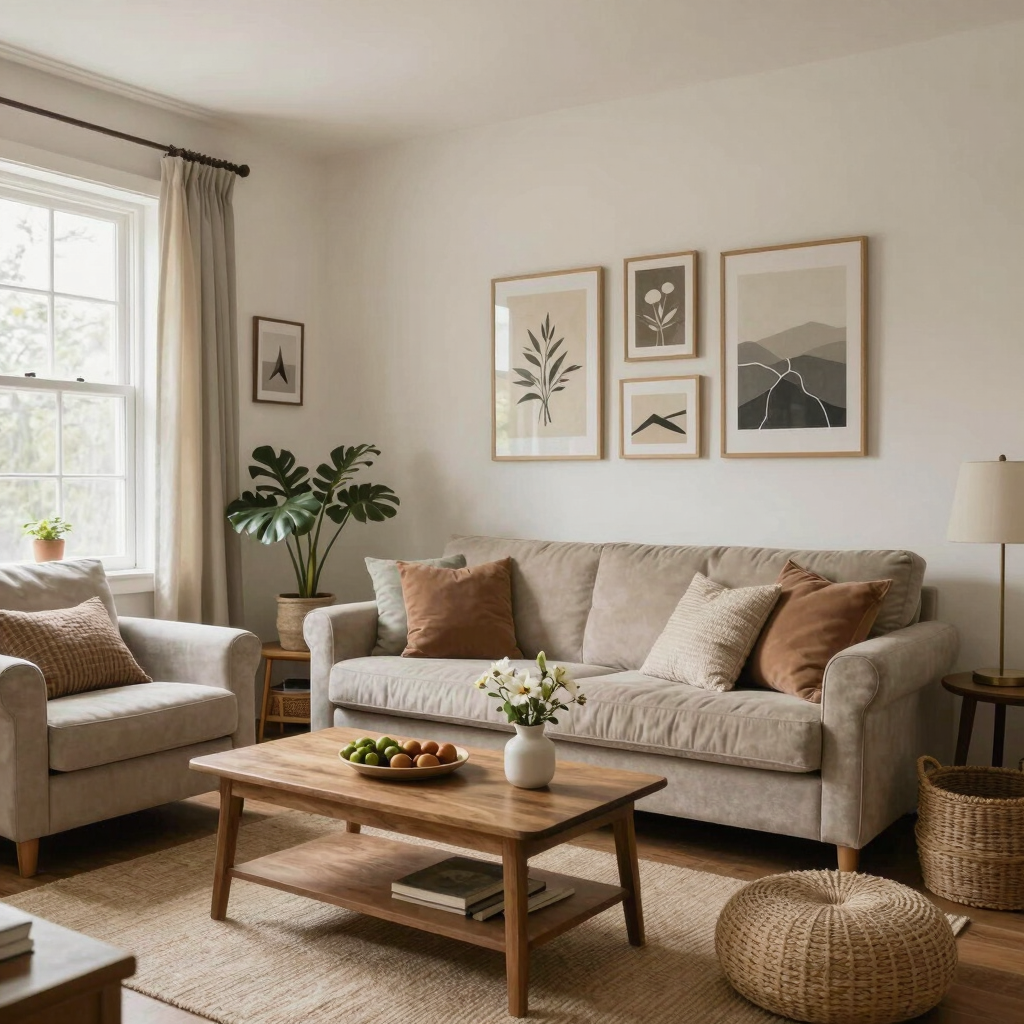
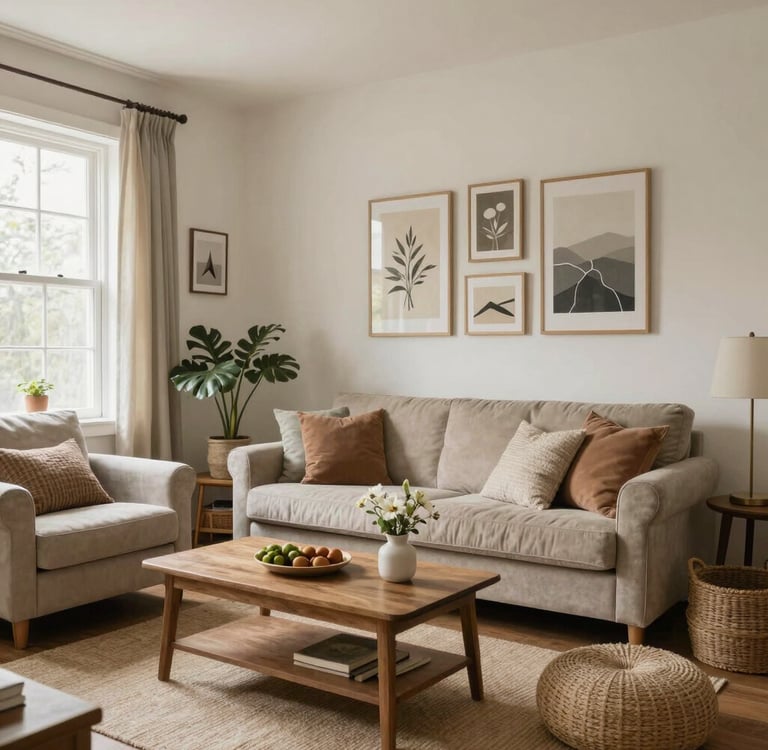
The living room was beautiful on its own. Neutral sofa, warm wood coffee table, a soft vintage-style rug.
Then we stepped into the dining room.
Black metal chairs. A glass table. Modern lighting.
The kitchen had brushed gold hardware.
The bedroom had cool gray tones.
Nothing was ugly. Nothing was cheap. Nothing was technically “wrong.”
And yet the whole house felt… disconnected.
Like flipping through a book where every chapter was written by a different author.
She looked at me and said the thing I hear constantly:
“I just want my home to feel pulled together.”
If you’ve ever felt that — like every room looks fine by itself but the house doesn’t feel unified — the problem usually isn’t decor.
It’s cohesion.
And cohesion is something most people were never taught.
Let’s change that.
Why Our Brains Crave Consistency
Your brain is wired to look for patterns.
Patterns tell your nervous system that things are predictable and safe. When your brain recognizes repeated colors, materials, or shapes, it relaxes because it understands the environment.
When every room introduces a completely different visual language, your brain has to start over each time.
New colors. New finishes. New style cues.
Individually, those things can be beautiful.
But together they create subtle mental friction.
That’s why some homes feel peaceful the moment you walk in, while others feel slightly chaotic even when they’re styled nicely.
Screenshot this:
Cohesion isn’t about matching. It’s about repeating.
Repeating colors. Repeating materials. Repeating visual rhythm.
Once you understand this, creating a cohesive home becomes much simpler.
The “House Story” Most Homes Are Missing
Designers rarely think about rooms individually.
We think about the story of the entire home.
Every room is a chapter, but the language stays the same.
For example, imagine walking through a home where you notice:
• Warm wood tones repeating in the coffee table, dining table, and nightstands
• Soft neutral fabrics appearing in different forms
• Black accents showing up in lighting, frames, and hardware
Suddenly the house feels intentional.
Not because everything matches.
But because the story is consistent.
Here’s a simple exercise you can try today:
Stand in your living room and ask yourself:
If someone walked through my entire home, what three materials or colors would they see repeated?
If the answer is unclear, that’s your starting point.
The 3-Thread Rule Designers Use
One of the simplest ways to create cohesion is something I call the 3-thread rule.
Pick three visual threads that run through your home.
Examples might be:
• A specific wood tone
• One metal finish (black, brass, or chrome)
• A consistent neutral palette
Those threads should appear in almost every room.
Not identically.
But recognizably.
For example:
The black metal in your living room lamp might reappear in your kitchen hardware. The warm wood coffee table might echo the tone of your dining chairs. A soft cream color might show up in bedding, curtains, or upholstery.
Screenshot this:
Cohesion comes from quiet repetition.
When your brain notices those patterns, the whole home starts to feel connected.
Why Overdecorating Breaks Cohesion
Here’s something that surprises a lot of people.
Too much decor actually works against cohesion.
When every surface is styled, every shelf is filled, and every wall is decorated, the visual signals start competing with each other.
Your brain stops recognizing patterns because there’s simply too much information.
That’s why minimal edits often make a home feel more polished.
Try this today:
Remove two decor items from every room.
Just temporarily.
Step back and notice what happens.
The repeating elements in your home suddenly become more obvious.
And the house starts to breathe.
The Power of Transitional Spaces
One of the most overlooked parts of cohesion is the spaces between rooms.
Hallways. Entryways. Sightlines from one room into another.
These areas act like bridges in your home’s story.
If your hallway contains a color, frame style, or material that appears in both connecting rooms, your brain naturally links those spaces together.
Designers often use:
• Similar picture frames
• Repeating light fixtures
• Shared color accents
These small choices quietly stitch the house together.
When a Home Finally Feels Cohesive
When cohesion is working, the shift is subtle but powerful.
You walk from the living room to the kitchen and nothing feels jarring.
The house feels calm. Connected. Intentional.
Guests may not know why the home feels good.
But they feel it.
And the best part?
You usually don’t need to buy anything new to create it.
You simply need to edit, repeat, and connect what already exists.
Inside Your Space Simplified, I teach you how to build this kind of whole-home clarity step by step, so your rooms stop feeling like separate projects and start feeling like one intentional space.
Because once you understand how cohesion works, decorating becomes easier, decisions become clearer, and your home finally begins to feel like it flows.
Your guide is on it's way!
© 2026 Elegant Living Co. All rights reserved.
All content on this website — including but not limited to text, guides, templates, graphics, and design concepts — is the intellectual property of Elegant Living Co and may not be copied, reproduced, distributed, or shared without written permission.
Terms and Conditions:
By using this website and purchasing from Elegant Living Co, you agree to our terms. All content, digital products, and design materials are the intellectual property of Elegant Living Co. and may not be copied or shared without permission. Design services are based on client-provided information. Elegant Living Co is not responsible for inaccuracies, third-party purchases, or installation outcomes. We reserve the right to update services, pricing, and policies at any time.
Refund Policy:
All digital product sales are final due to instant access. Design services are non-refundable once work has begun. Cancellations made before the start date may be eligible for partial refund at our discretion. If you have any issues with your purchase, please reach out — we’re here to help.
FREE: Make Your Room Look Expensive
Steal my designer checklist for creating a polished, timeless room without the designer price tag.
☑ Furniture placement
☑ Rug sizing
☑ Lighting
☑ Curtains
☑ Styling
☑ Designer finishing touches
Plus occasional affordable decorating tips and Elegant Living Co. updates. Unsubscribe anytime.
Your interior design bestie